You open three different rate websites. One shows 6.2%. Another shows 6.8%. A third gives you a number that does not match either one. You are left wondering which price is real, and every day you wait could cost you more money.
This guide clears up that confusion. We pulled today’s real midland mortgage rates, broke down every loan type in plain language, and added the local costs that most rate pages skip. By the end, you will know exactly what rate to expect and how to lock in the best one for your budget.
Today’s Mortgage Rates in Midland
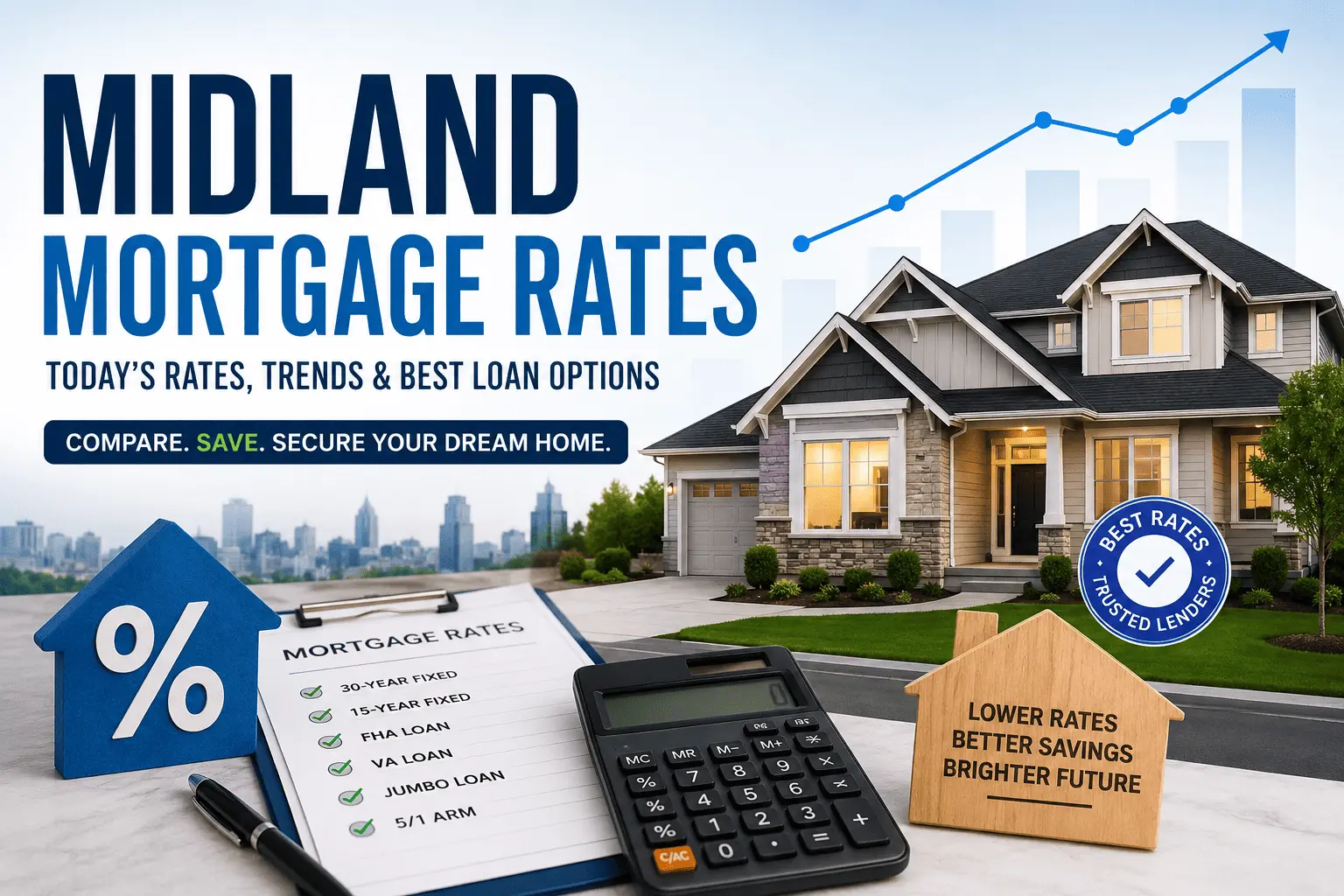
Right now, midland mortgage rates move based on the bond market, the Federal Reserve, and your personal financial profile. The table below shows a general snapshot of where rates sit today across the most common loan types.
| Loan Type | Purchase Rate | Refinance Rate |
|---|---|---|
| 30-Year Fixed | 6.4% – 6.7% | 6.5% – 6.8% |
| 15-Year Fixed | 5.7% – 6.0% | 5.8% – 6.1% |
| 5/1 ARM | 6.0% – 6.3% | 6.1% – 6.4% |
| FHA Loan | 6.1% – 6.4% | 6.2% – 6.5% |
| VA Loan | 5.9% – 6.2% | 6.0% – 6.3% |
| Jumbo Loan | 6.5% – 6.9% | 6.6% – 7.0% |
Rates change daily. Always confirm the exact quote with a licensed lender before you apply.
Purchase Rates by Loan Type
If you are buying a home, your rate depends on your loan type, your down payment, and your credit score. A 30-year fixed loan gives you steady payments for three decades. A 15-year fixed loan costs more each month but saves you thousands in interest over time.
Adjustable-rate loans start lower but can rise after the fixed period ends. Government-backed loans like FHA and VA often carry slightly lower rates because the lender takes on less risk.
Refinance Rates by Loan Type
Refinance rates usually sit a little higher than purchase rates. Lenders see refinances as carrying more risk since there is no new home purchase attached to the deal. Still, if your current rate is well above today’s average, a refinance can lower your monthly payment fast.
Mortgage Rates by Credit Score
Your credit score has a direct impact on your rate. Borrowers with scores above 780 usually get the lowest rates available. Scores between 700 and 739 still qualify for good rates, but the gap grows wider below 660.
A jump of even 20 points on your credit report can lower your rate by a noticeable margin. That small change can save you real money across a 30-year loan term.
Midland Mortgage Rate Trends & Forecast
Midland mortgage rates have shifted throughout the year as inflation data and Fed decisions changed. Tracking this trend helps you time your application better.
How Rates Have Moved Recently
Over the past few months, rates have moved within a narrow band instead of swinging wildly. Economic reports on jobs and inflation have kept lenders cautious. This steadier pattern makes it easier to plan your purchase or refinance timeline.
6–12 Month Rate Forecast
Most housing economists expect rates to stay close to current levels for the next several months. A rate drop could happen if inflation cools faster than expected. Waiting for a perfect rate, though, often costs more in missed opportunity than it saves.
Types of Mortgage Loans Available in Midland

Different loans fit different situations. Picking the right one matters just as much as picking the right rate.
Conventional Fixed-Rate Mortgage
This is the most common loan type. Your rate and payment stay the same for the entire loan term, which makes budgeting simple and predictable.
Adjustable-Rate Mortgage (ARM)
An ARM starts with a lower rate for a set period, often five or seven years. After that, the rate adjusts based on market conditions. This loan works best for buyers who plan to move or refinance before the adjustment period starts.
FHA Loan
FHA loans are backed by the government and allow lower credit scores and smaller down payments. They are a strong choice for first-time buyers who need more flexible approval rules.
VA Loan
VA loans are available to eligible veterans, active service members, and some surviving spouses. They often require no down payment and carry competitive rates.
Jumbo Loan
A jumbo loan is used when the home price goes beyond the standard conforming loan limit. These loans carry stricter approval rules and slightly higher rates due to the larger loan amount.
Compare Midland Mortgage Lenders
Not every lender offers the same rate for the same borrower. Local banks, credit unions, online lenders, and mortgage brokers all price loans differently based on their own costs and risk models.
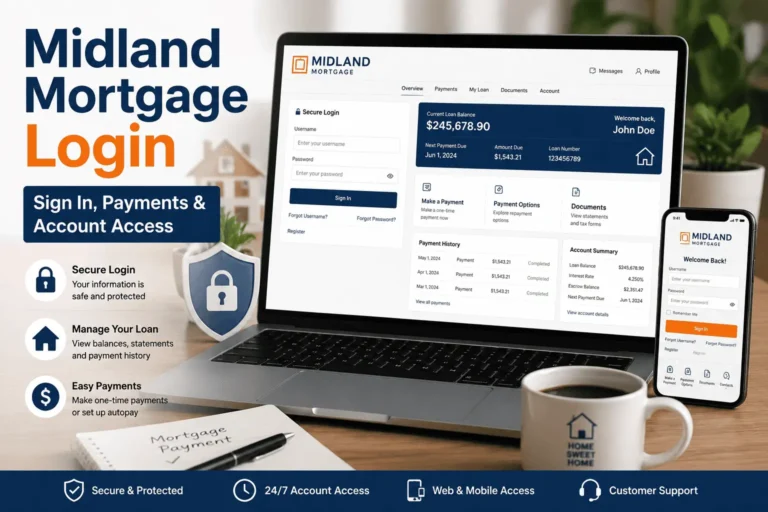
Credit unions often offer lower fees but may have slower processing times. Online lenders move fast but can lack local market knowledge. It pays to request quotes from at least three sources before you choose one. If you already have a loan with a servicer like Midland Mortgage and want to understand your account setup, you can review this Midland Mortgage overview for a clear breakdown of how login, payments, and support work.
If you have questions about comparing lender offers, you can reach out at james@allthings-mortgage.com for guidance.
How Mortgage Rates Are Determined
Rates are not picked at random. They follow the 10-year Treasury yield, inflation data, and Federal Reserve policy. On top of that, your personal factors — credit score, down payment size, loan type, and property location — shape your final number.
Lenders also add a margin to cover their own costs and profit. That is why two people applying on the same day can still get two different rates.
Points, Fees & Closing Costs in Midland
Closing costs usually run between 2% and 5% of your loan amount. These include the appraisal fee, title insurance, origination fee, and prepaid taxes or insurance.
Discount points let you pay extra upfront to lower your rate. One point typically costs 1% of your loan amount and can lower your rate by about 0.25%. This move makes sense if you plan to stay in the home for many years.
How to Get the Lowest Mortgage Rate in Midland

A few smart moves can shave real money off your rate before you even apply.
- Check your credit report and fix any errors early
- Save for a larger down payment if possible
- Get quotes from at least three lenders
- Compare the APR, not just the advertised rate
- Get pre-approved before house hunting starts
Small steps like these often make a bigger difference than people expect.
Documents You’ll Need to Apply for a Mortgage
Lenders ask for a standard set of paperwork to verify your income and identity.
- Recent pay stubs and W-2 forms
- Two years of tax returns
- Bank statements from the past two to three months
- Photo ID and Social Security number
- Proof of any additional income
Having these ready before you apply speeds up approval and avoids delays. If your loan is already active and you need to update mailing details, this Midland Mortgage address guide explains where to send documents correctly.
Should You Lock Your Mortgage Rate Today?
Locking your rate protects you from increases while your loan closes. Floating your rate means you are betting rates will drop before closing day. Most lock periods run 30, 45, or 60 days, and longer locks usually cost a bit more.
Watch the Federal Reserve meeting calendar closely. Rate announcements around those dates can move the market quickly in either direction. If you already have an active loan and want to manage your monthly bill while you decide, this Midland Mortgage payment guide walks through your payment options.
First-Time Homebuyer Programs & Down Payment Assistance in Midland
Many first-time buyers do not realize how many programs exist to help with upfront costs. State and local housing agencies often offer grants or low-interest second loans to cover part of the down payment.
Some programs also help specific situations, such as buying a home for an aging parent or a family member with a disability. If that applies to you, this Family Opportunity Mortgage guide explains how that loan type works step by step.
Midland Housing Market & Affordability Snapshot
Home prices and local income levels both affect how far your budget stretches. A lower rate helps, but the full picture includes more than just the interest number.
Full Monthly Cost Breakdown (Taxes, Insurance, HOA, PMI)
Your monthly payment includes more than principal and interest.
- Property taxes, based on your home’s assessed value
- Homeowners insurance, required by most lenders
- HOA fees, if your property is part of an association
- PMI, required on conventional loans with less than 20% down
Adding these together gives you your true monthly cost, not just the loan payment alone.
Example: What Your Monthly Payment Looks Like in Midland
Numbers make this easier to picture. Say you buy a $280,000 home with 10% down at today’s average rate.
30-Year vs. 15-Year vs. ARM Payment Comparison
A 30-year fixed loan on that amount lands near $1,650 per month before taxes and insurance. A 15-year fixed loan raises that payment to around $2,150 but cuts total interest paid by more than half. A 5/1 ARM might start near $1,580 per month, but that number can rise once the fixed period ends.
Choosing between these comes down to how long you plan to stay and how much monthly flexibility you need.
When to Refinance Your Midland Mortgage
Refinancing makes sense when your new rate is at least 0.75% to 1% lower than your current one. You also need to consider closing costs and how long you plan to stay in the home. If those costs take three years to recover through monthly savings, and you plan to move in two, refinancing may not pay off.
If you are close to finishing your current loan and need a final number to plan your next step, this Midland Mortgage payoff request guide shows how to request that statement without delays.
About Our Rate Data
The rate ranges in this guide are based on averages gathered from multiple lender sources and updated regularly to reflect current market conditions. For a personalized quote, always confirm directly with a lender, since your exact rate depends on your credit profile and loan details. Questions about the data or your options can be sent to james@allthings-mortgage.com.
Conclusion
As promised at the start, this guide gave you a clear, complete picture of midland mortgage rates instead of leaving you guessing between mismatched numbers. You now know how rates are set, which loan type fits your goals, and what steps actually lower your cost. Use the checklist above before you apply, and compare at least three lenders to make sure you get the best deal available. With this information in hand, you can move forward with confidence instead of confusion.
Frequently Asked Questions
What is a good mortgage interest rate today?
A good rate sits below the current national average for your loan type and credit tier. Well-qualified buyers currently see rates in the mid-6% range on a 30-year fixed loan. Your exact number depends on credit score, down payment, and loan type.
How is APR different from the interest rate?
The interest rate only reflects the cost of borrowing your loan amount. APR includes the interest rate plus lender fees, origination charges, and closing costs. This gives you a fuller, more accurate picture of what the loan truly costs each year.
Do I need 20% down to buy a home?
No, most loan programs allow down payments as low as 3% to 3.5%. FHA and VA loans offer even more flexibility for qualified buyers. Putting down less than 20%, though, usually means paying private mortgage insurance until you build equity.
What credit score do I need for the best rate?
Lenders typically reserve their lowest rates for credit scores above 780. Scores between 700 and 780 still qualify for competitive pricing on most programs. Even a small score improvement can meaningfully lower your quoted rate.
How much are closing costs in Midland?
Closing costs generally range from 2% to 5% of the total loan amount. This covers the appraisal fee, title insurance, origination charges, and prepaid taxes or insurance. Costs vary by lender, loan type, and property price.